About Me / Miscellaneous
This is just a list of things I like with accompanying links, musings, and trivia.
I used to use Void Linux with dwm and st, but desktop ricing and tiling window managers are a young man’s game; my current setup is Gnome with windows fullscreened on every workspace, and a fontsize that’s just a little too big to look cool. This website used to run on a crufty, old Python CMS I wrote during the Covid-19 lockdown that mimicked werc, but I’ve recently transitioned to Hugo.
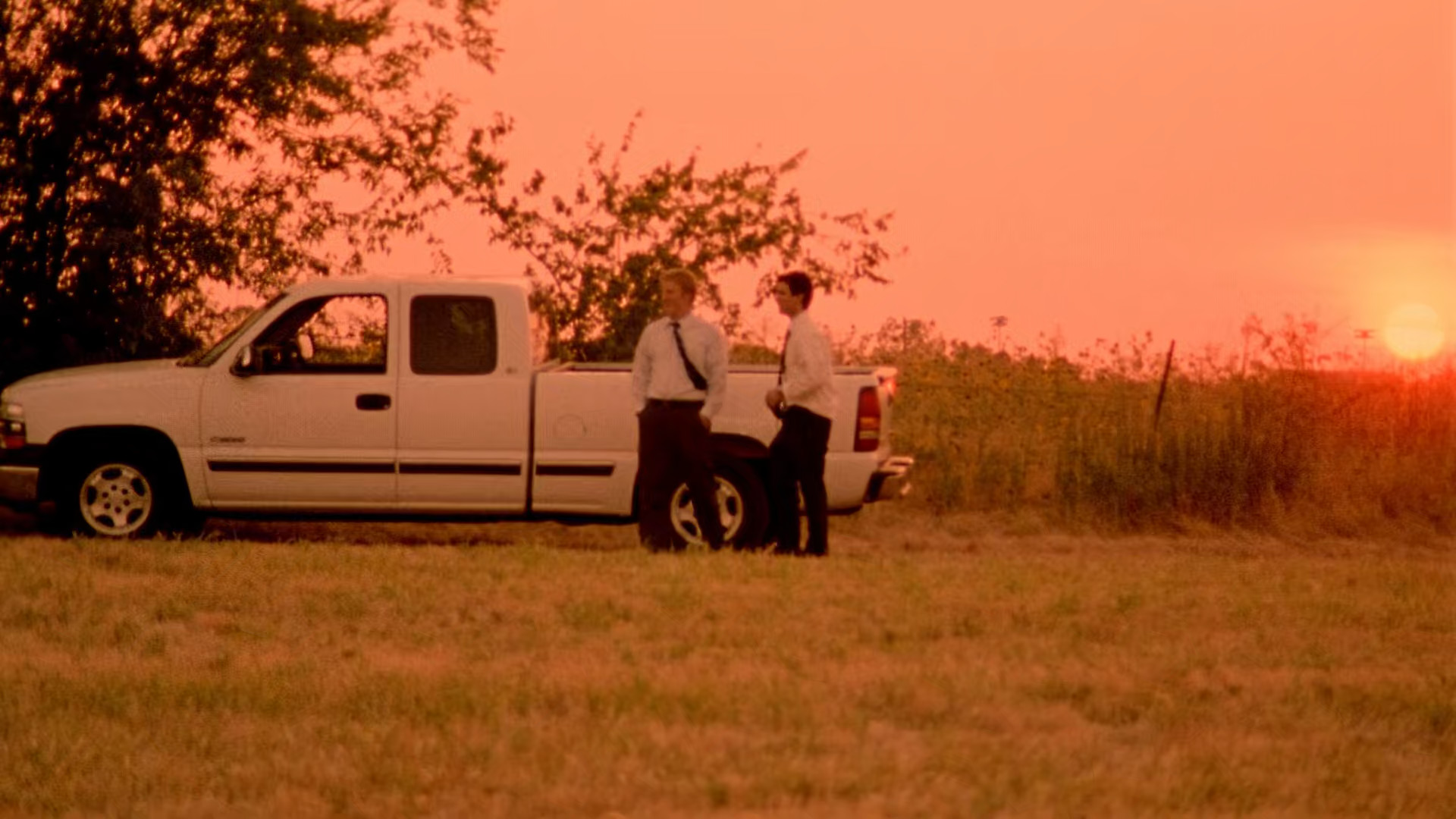
Favorite movies: Primer, Amadeus, Dr. Strangelove, The Big Lebowski.
Primer is the best time-travel movie I have ever seen. It’s a bit dense and only about an hour long, so I find it a little hard to say much without leaking a spoiler of some sort. The two main characters, Aaron and Abe, act like intelligent and grounded people, and you become immersed in their world very quickly. The dialogue feels natural, as if you were peering into the conversations of two engineers slowly coming to understand what the odd curiosity in their garage actually is. It’s also crazy fun to decipher and analyze the timeline chart – if you’re done watching the movie, here are two particularly detailed (and in places, mutually contradictory) explanations: https://qntm.org/primer and https://friendsinyourhead.com/primer/. This is also the only movie I’ve listened to the director’s commentary track for, and it’s worth it.
I don’t have much to say about Dr. Strangelove besides mentioning its sister-film, Fail Safe. Directed by Sidney Lumet, the movie is based on the novel Fail-Safe which is similar in terms of the plot to the earlier novel Red Alert – the book Dr. Strangelove is based on. So the story goes that Lumet was positioned to get Fail Safe out onto screens before Dr. Strangelove, but Stanley Kubrick decided to throw Lumet and Co. into legal hell by suing them for copyright infringement, and Kubrick eventually succeeded in getting Dr. Strangelove out first. But if you want to watch Walter Matthau play a war hawk of the nuclear holocaust variant, Fail Safe has you covered.
The other interesting thing is that the character of Strangelove was partly based on Herman Kahn, a physicist working for the RAND corporation during the Cold War. There’s a ~50 page paper, The Nature and Feasibility of War and Deterrence, written by Kahn in 1960 that gives a view into what people were thinking in those days.
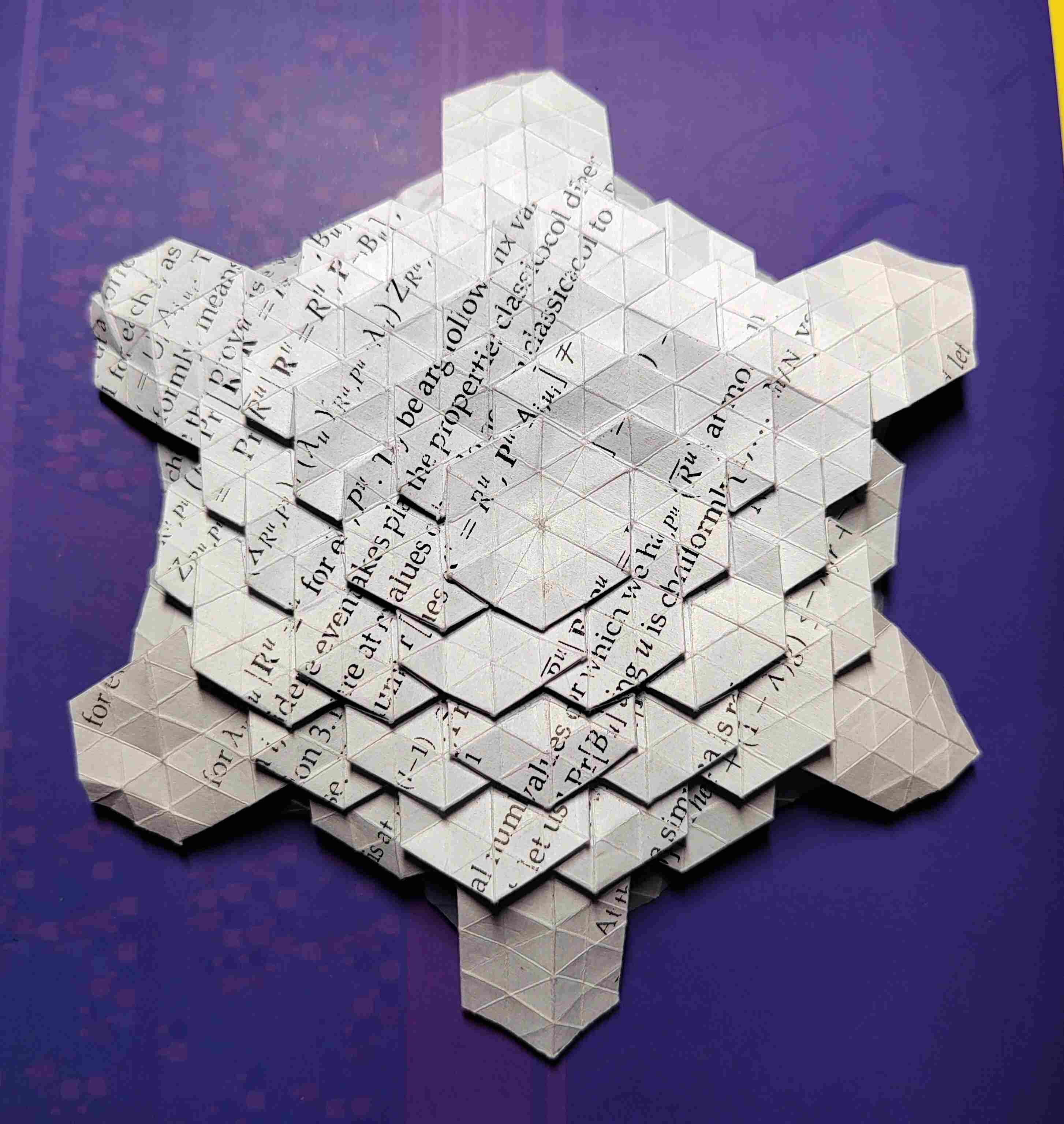
I was into origami as a kid, I’ve been trying to get back into it. Here’s a tessellation I made recently:
Here’s a great list of optical illusions: https://michaelbach.de/ot/. My favorite one is the McCollough effect, I looked at the graphic for ten minutes once and the effect lasted the whole day. I’d draw a small grid on my notebook with my pen while bored, and I’d see the colors on my notebook!
Another pretty cool thing most people don’t know about is that we have blindspots in our vision due to the way the optic nerve passes through the retina, but we typically never notice it since our brain fills in the gaps. I used to get migraines as a kid, but never experienced a visual aura. Except, earlier this year for whatever reason, I experienced a visual migraine where this wavy shimmering line crept its way across my field of view over the course of twenty minutes. It was like an extended blindspot that my brain would try filling in, and I’d only be able to tell I couldn’t see if I explicitly tried to read some text, it was a weirdly trippy evening.
Oh, and human eyes can detect polarized light! Now, due to the way Rayleigh scattering works, light from the sky is polarized, and the strongest band of polarization is at a 90° angle from the Sun. Bees have extremely cool compound eyes that can detect the angle of polarization, and this helps them orient themselves and navigate even if the Sun is hidden behind thick clouds or heavy weather. Well, humans can do it too, supposedly. If you look at the sky just right, and you practice for long enough, you should see Haidinger’s brush, a faint and fuzzy bowtie-like shape in the center of your vision before it quickly fades away. I’ve never been able to see it myself, but someday I hope to.
Some cool stuff:
- The Unix-Haters Handbook: https://web.mit.edu/~simsong/www/ugh.pdf. This is a collection of highly polemical and gut-wrenchingly hilarious posts complaining about the various inadequacies of Unix from the UNIX-HATERS mailing list at the MIT Media Lab in the ’90s. Also being into Lisp, I have to link this (infamous?) article on Worse is Better: https://www.dreamsongs.com/RiseOfWorseIsBetter.html. And since I don’t really have anywhere better to put this, here’s a nice post on why Common Lisp macros are cool: http://lists.warhead.org.uk/pipermail/iwe/2005-July/000130.html.
One obvious advantage is that there hardly is any syntax. You can learn enough Lisp syntax to write useful programs in about ten minutes. This was driven home to me when I was in my first year of college. I was hanging around a fraternity house, talking to Paul, one of the brothers, who was a physics major. He was taking a class that was given every spring that covered four different programming languages for three weeks each. Paul told me that he liked Lisp because there was hardly any syntax to remember, and it was all simple. “Everything’s an expression,” he said. “Every expression gets evaluated. If you don’t want it evaluated, you put a quote on it. Simple.”
But a bigger advantage is that it makes it possible to write Lisp programs that reliably generate and transform Lisp source code. If you’re not used to Lisp, it’s hard to imagine how tremendously useful this is. […]
- Funnies on the GNU website: https://www.gnu.org/fun/humor.html.
- Scott Aaronson’s comedy routine at the 2006 QIP dinner: https://scottaaronson.blog/?p=49.
- Terence Tao nearly bombing his Princeton generals: https://www.ams.org/notices/202007/rnoti-p1007.pdf and https://web.math.princeton.edu/generals/students/tao_terence.